Skip to content Skip to footer
Introduction

In today’s rapidly evolving urban landscapes, space-saving parking solutions are more critical than ever. With the growing demand for efficient parking in dense residential areas, commercial complexes, and mixed-use developments, hydraulic parking systems have emerged as a game-changing solution. In this blog, we will explain what hydraulic parking systems are, how they work, and how they help save valuable space.

What is a Hydraulic Parking System?

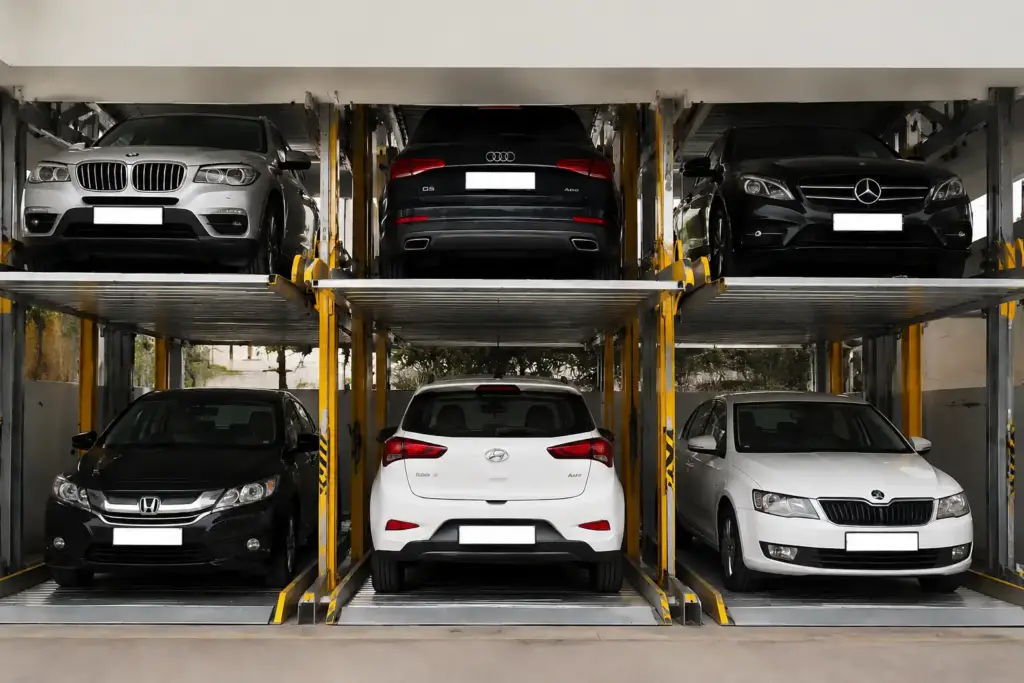
A hydraulic parking system is an automated vehicle parking solution that uses hydraulic lifts to move cars between levels. Unlike traditional parking garages, which take up a lot of space for each vehicle, hydraulic parking systems maximize available space by stacking vehicles vertically or rotating them into place.

These systems are designed to automate parking and retrieval processes, significantly reducing the time spent parking or searching for a spot. The most significant advantage of hydraulic parking systems is their space-saving capability, making them ideal for urban areas where land is scarce.

Core Components Explained

A hydraulic parking system consists of several key components that work together seamlessly to provide efficient parking and retrieval:

  • Hydraulic Lift: The core of the system, the hydraulic lift, is responsible for raising and lowering vehicles. Hydraulic pumps and cylinders enable smooth, quiet, and efficient operation.
  • Platform: The platform is where the vehicle rests during parking or retrieval. It moves vertically or horizontally based on the system’s design.
  • Control System: The control system is the brain behind the hydraulic parking system. It automates the process of parking and retrieving vehicles based on user input or a pre-set schedule. The control system ensures smooth operation and safety, directing the hydraulic lifts and platforms as needed.
  • Drive Mechanism: In some systems, a rotary drive mechanism allows for the rotation of platforms, enabling vehicles to be placed in tight spaces efficiently.

These components work together to provide an automated, reliable, and space-efficient parking solution.

Space-Saving Benefits — Real Metrics

One of the key advantages of hydraulic parking systems is their ability to save space in areas where land is at a premium. Traditional parking lots require large surface areas to accommodate cars, with each vehicle needing ample space to maneuver. In contrast, hydraulic systems utilize vertical space and compact designs, significantly reducing the required footprint.

Here are some real-world benefits in terms of space savings:

  • Vertical Stacking: Hydraulic parking systems can stack cars up to 10-12 stories high, which is impossible with conventional surface-level parking.
  • Reduced Land Footprint: For the same number of cars, hydraulic parking systems take up significantly less space compared to traditional parking methods. This is especially important in urban environments where real estate is expensive.
  • Increased Capacity: By using hydraulic lifts and automated platforms, these systems can double or even triple the parking capacity in the same physical space.

This makes hydraulic parking systems ideal for locations where maximizing space and minimizing land use are crucial.

Use Cases: Residential / Commercial / Mixed-Use

1. Residential Areas:
Hydraulic parking systems are perfect for apartment buildings and residential complexes where space is often limited. By stacking vehicles vertically or integrating multiple levels of parking, they make optimal use of available land, providing residents with easy access to parking in a high-density environment.

2. Commercial Developments:
For office buildings, shopping malls, and retail centers, hydraulic parking systems can drastically increase parking capacity while reducing the need for large parking lots. This not only saves valuable space but also improves the user experience, allowing employees and customers to park more quickly and conveniently.

3. Mixed-Use Developments:
In mixed-use developments, where residential, commercial, and leisure spaces exist together, hydraulic parking systems can offer a one-size-fits-all solution. The flexible, space-efficient design can be tailored to meet the needs of both residents and businesses, making them the ideal solution for such multi-functional spaces.

Conclusion

Hydraulic parking systems are transforming the way we approach parking in urban areas. By providing a space-saving, efficient, and automated solution, these systems are helping solve parking challenges in residential, commercial, and mixed-use developments. As cities continue to grow and the demand for parking increases, hydraulic parking systems will become a key part of the solution for smarter, more efficient urban planning.

Ready to maximize your space with Autogro’s hydraulic parking solutions?
Contact Us  for more information.

About Author

Phasellus et ipsum justo. Aenean fringilla a fermentum mauris non venenatis. Praesent at nulla aliquam ligula.

A
Autogro Assistant
Online now
Autogro Parking Solutions